



Alexi J. Rosenfeld/Getty Images


 Add JewishInsider on Google
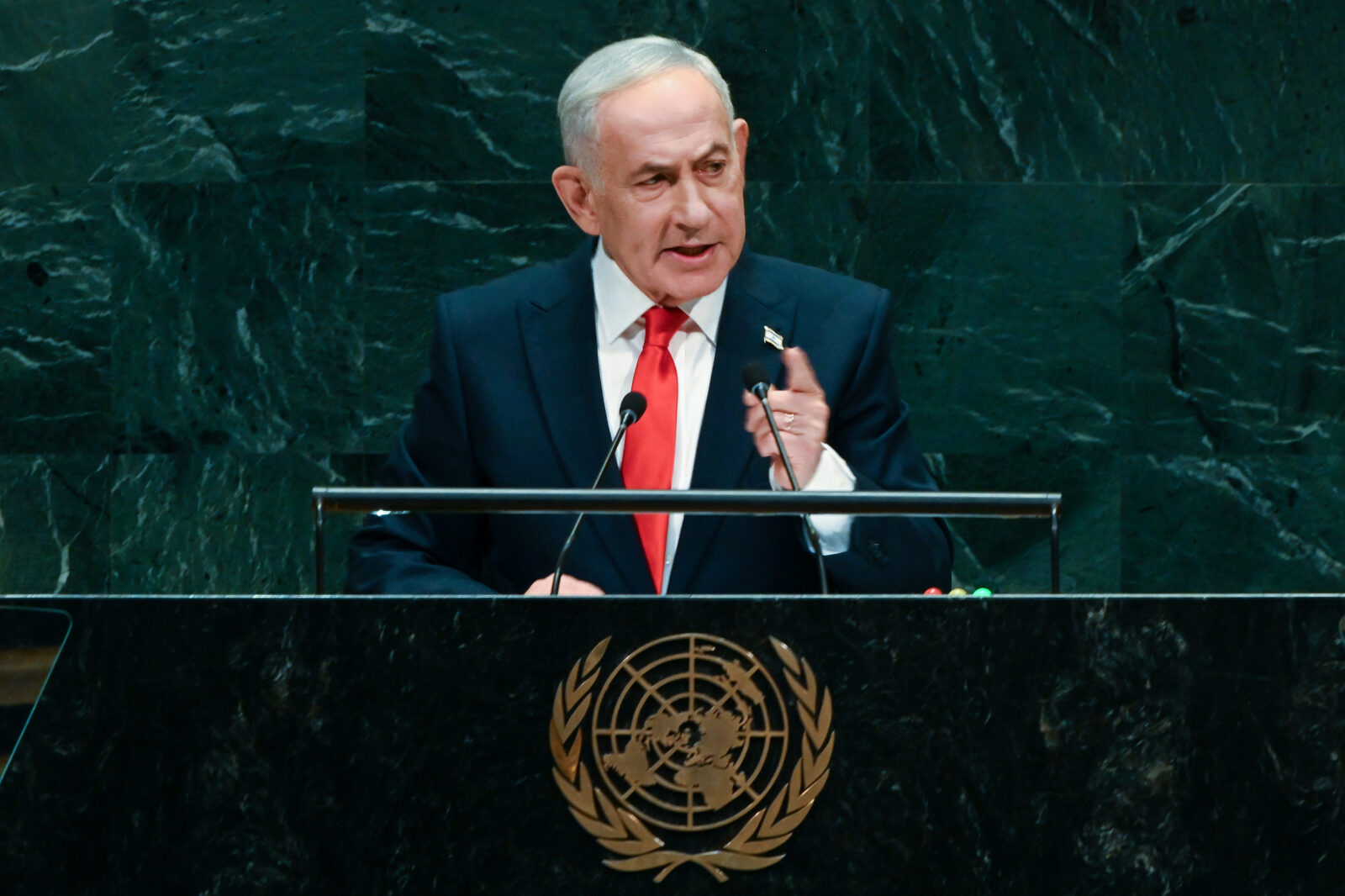
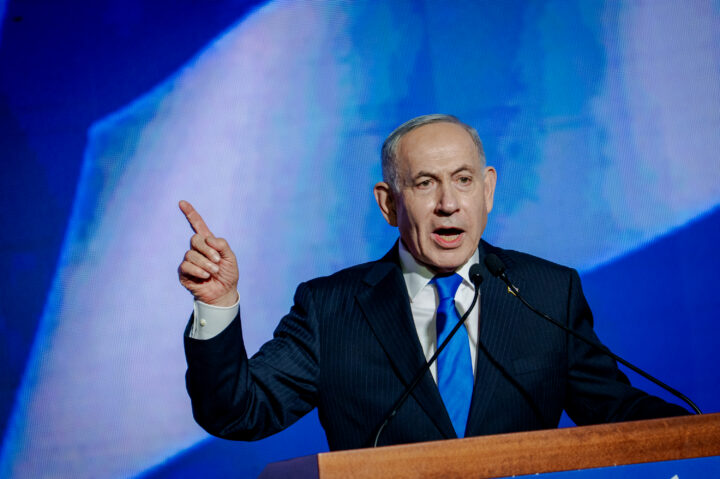
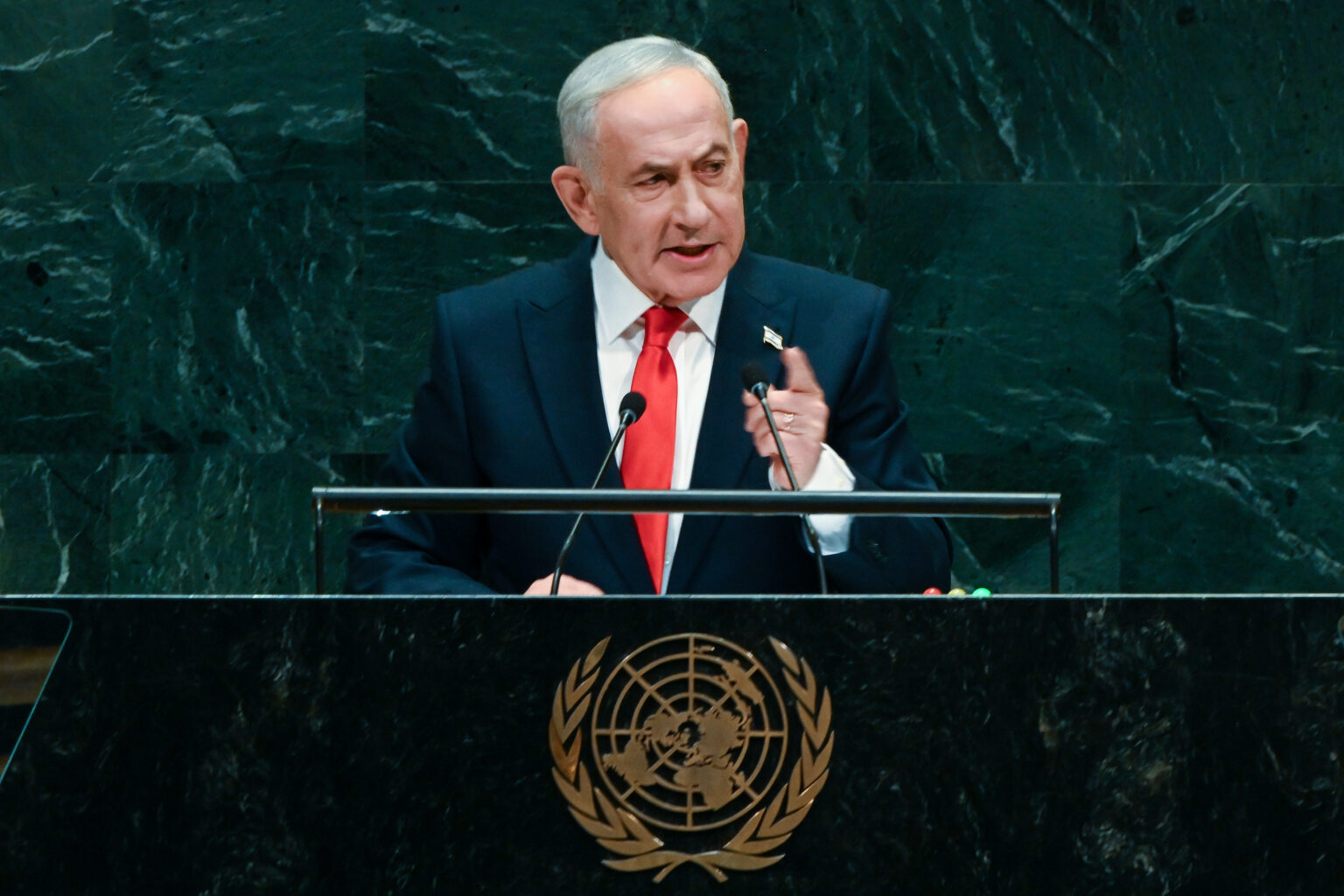
Israeli Prime Minister Benjamin Netanyahu pushed back against criticism of Israel over Gaza and the West Bank in his address to the United Nations General Assembly on Thursday, taking aim at New York City Mayor Zohran Mamdani, French President Emmanuel Macron, Qatar and Turkey.
After most of the hall conducted a walkout at the outset of his speech, Netanyahu condemned violence by Israeli settlers while dismissing the international focus on settler violence as an “obsession.” He said roughly 150 young Israelis were responsible for throwing stones, destroying olive trees and setting fires in the West Bank and said Israel had deployed the Shin Bet against them.
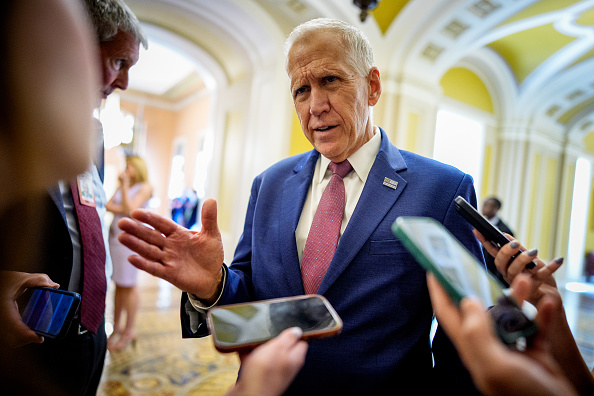
Photo by Andrew Harnik/Getty Images
Sen. Thom Tillis (R-NC) joined Democrats and a handful of Republicans in voting on Thursday for a war powers resolution demanding an end to the war in Iran. But, despite growing calls from vulnerable Republicans ahead of the midterm elections, most of the GOP continued to vote against the war powers effort, and the measure failed by a 50-49 vote.
“We’re reaching a point to where we just need answers. We got to know what success looks like,” Tillis, who is not running for a third Senate term, said earlier this week. “There’s never been any way to measure what success looks like. … For every step we take forward, we take a step back.”
Spencer Platt/Getty Images
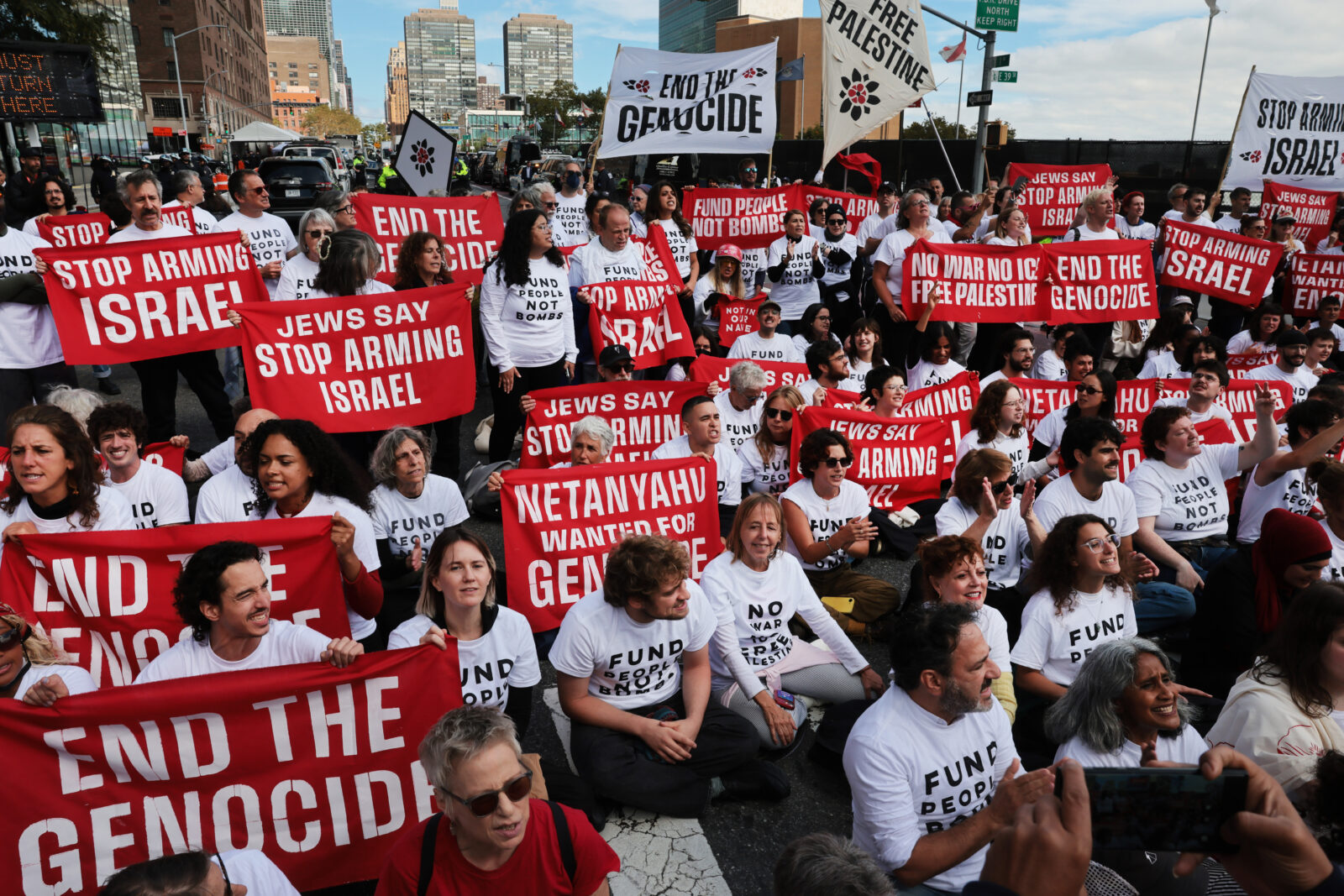
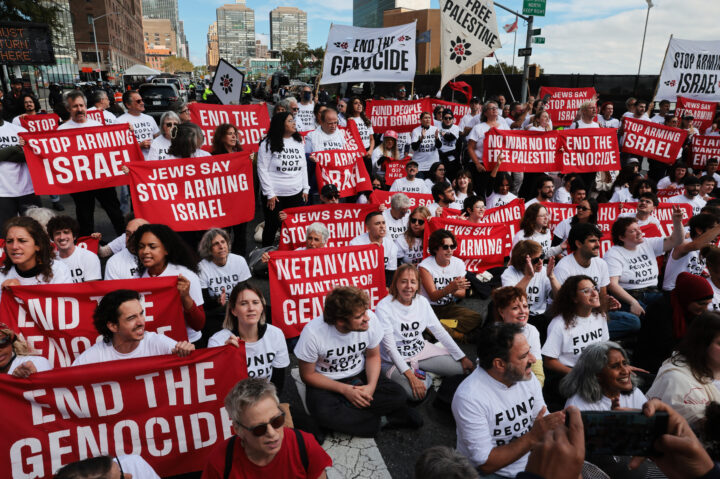
Several far-left Democrats expected to be elected to the House of Representatives in November attended a protest on Thursday organized by Jewish Voice for Peace that blocked the streets outside United Nations headquarters during Israeli Prime Minister Benjamin Netanyahu’s speech to the body’s General Assembly.
Dozens of protesters, including New York Democratic congressional nominee Darializa Avila Chevalier, were arrested by the NYPD for refusing to comply with an order to disperse.
Emily Elconin/Getty Images
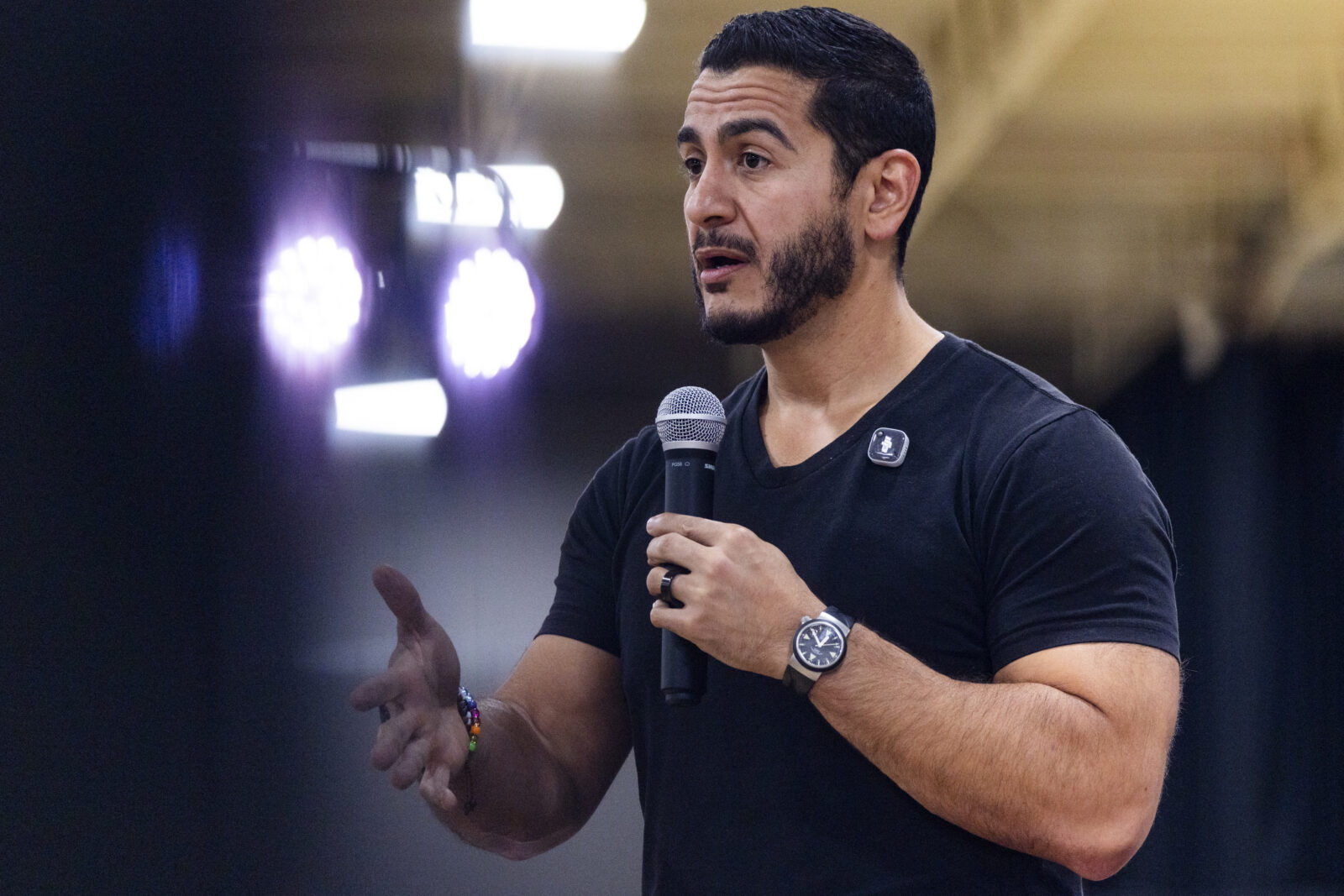
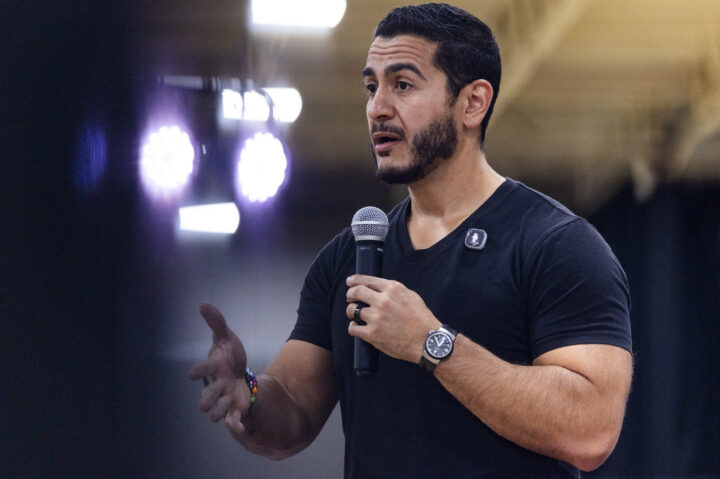
Pressed during an event on Wednesday to condemn the Iranian regime’s massacre of tens of thousands of protesters earlier this year, Democratic Michigan Senate candidate Abdul El-Sayed sidestepped the question, focusing his answer on criticizing the U.S. war in Iran.
A Persian American student — who said that his cousin had been “hunted in the streets” by the Islamic Revolutionary Guard Corps for wearing her hijab improperly and that his uncle was “sentenced to die [and] received 50 lashings” — pressed El-Sayed to “renounce” those who supported assassinated Iranian Supreme Leader Ayatollah Ali Khamenei. The student, speaking at a town hall held at the University of Michigan, additionally called on El-Sayed to “stand unequivocally against the IRGC, against the Islamic Republic of Iran” and make some statement in support of the protesters.
(Erik Marmor/Getty Images)
For a few hours, Israel’s deeply polarized political arena, just a month before the elections, found rare unity. It came following the news that Neria Leiter, son of Israel’s ambassador to the U.S., Yechiel Leiter, was critically injured in a car-ramming terror attack in the West Bank. Neria chose to continue his reserve duty, including serving in Lebanon, even after his brother Moshe fell in battle in northern Gaza in November 2023.
Ambassador Leiter was on his way to a CNN interview ahead of Israeli Prime Minister Benjamin Netanyahu’s address to the U.N. General Assembly, set to take place this afternoon, when he received the news about his son, and quickly departed for Israel. That speech will likely now take a turn following the attack.

Yisroel Teitelbaum
Sen. Ted Cruz (R-TX) warned on Wednesday that Christian leaders are “asleep” and failing to recognize the degree to which antisemitism and anti-Israel sentiment have spread among Christian youth.
The Texas senator made the comments while accepting the leadership award at the American Friends of Lubavitch (Chabad) annual Lamplighter Awards in Washington. Cruz voiced concern that older Christian leaders, specifically evangelicals, were not acknowledging that younger adherents have ideologically drifted from previous generations. “If you look at the polling, young evangelicals are turning systematically against Israel, and there are millions of dollars that are being spent to turn them against Israel,” he said.

CHANDAN KHANNA/AFP via Getty Images
The State Department is planning a memorial ceremony for American victims of the Oct. 7, 2023, Hamas attacks on Israel, currently scheduled for Sept. 30.
The event is being planned in collaboration with the American Jewish Committee, which is helping to bring families of the victims to Washington to attend the ceremony in Foggy Bottom, an AJC spokesperson told Jewish Insider.

AP Photo/Luis M. Alvarez
Nineteen Jewish House Democrats, writing under the auspices of the Congressional Jewish Caucus, sent a letter to Secretary of State Marco Rubio on Wednesday opposing a reported plan to merge the offices of the State Department’s special envoy for Holocaust issues (SEHI) and special envoy to monitor and combat antisemitism (SEAS).
Longtime Holocaust envoy Ellen Germain recently retired from her post, and antisemitism envoy Ambassador Yehuda Kaploun has been pushing to merge the two posts, a prospect that has received mixed reactions from Jewish communal organizations.
TAKING AIM
Netanyahu targets Mamdani, Macron and foreign critics in UNGA address
WAR POWERS WOES
Senate narrowly rejects Iran war powers resolution, as Tillis joins Democrats to oppose war
PROTEST POLITICS
Incoming anti-Israel members of Congress protest against Netanyahu outside U.N.
REGIME RECKONING
El-Sayed avoids acknowledging Iranian protester deaths, condemns Iran war instead
Daily Kickoff
Netanyahu’s New York minute
analysis
Attack on Ambassador Leiter’s son casts pall over Netanyahu’s abbreviated UNGA visit
WAKE-UP CALL
Cruz warns Christian leaders are ‘asleep’ on antisemitism among youth
MEMORIAL EVENT
State Department plans memorial for American victims of Oct. 7 attack
ENVOY DEBATE
Congressional Jewish Caucus opposes proposal to combine State Dept. Holocaust, antisemitism offices
NO COMPROMISE
El-Sayed refuses to tone down Israel attacks despite prompting from Democratic podcast hosts
FAMILY TRAGEDY
Israeli ambassador’s son seriously wounded in West Bank car-ramming attack
ALTERNATE REALITY
Pezeshkian denies Iran seeks nuclear weapons at UNGA
SANCTIONS PUSH
Coons, Senate Democrats introduce sanctions bill aiming to block E1 settlement construction
SECURITY ADVOCACY
‘Life and death’: Survivors of antisemitic attacks lobby Congress for security aid
Daily Kickoff
Politico’s Yom Kippur schmear job
Subscribe now to
the Daily Kickoff
The politics and business news you need to stay up to date, delivered each morning in a must-read newsletter.
I’ve been finding the morning blast from JI very useful for all my Jewish news needs.

Jeffrey Goldberg
Editor in Chief of The Atlantic
Most Read Stories
Schmear campaign
Politico picks Yom Kippur to attack Huckabee’s observant Jewish aide
NO COMPROMISE
El-Sayed refuses to tone down Israel attacks despite prompting from Democratic podcast hosts
CANARY CALL
Two Seattle Jewish leaders warn of Jewish complacency in face of rising antisemitism
CANDIDATE CALCULATIONS
Vulnerable Republican candidates urge end to Iran war
POLICY PIPELINE
Deborah Lipstadt launches Emory institute to train the next generation of policymakers fighting antisemitism

Please log in if you already have a subscription, or subscribe to access the latest updates.
 Continue with Google
 Continue with Apple